
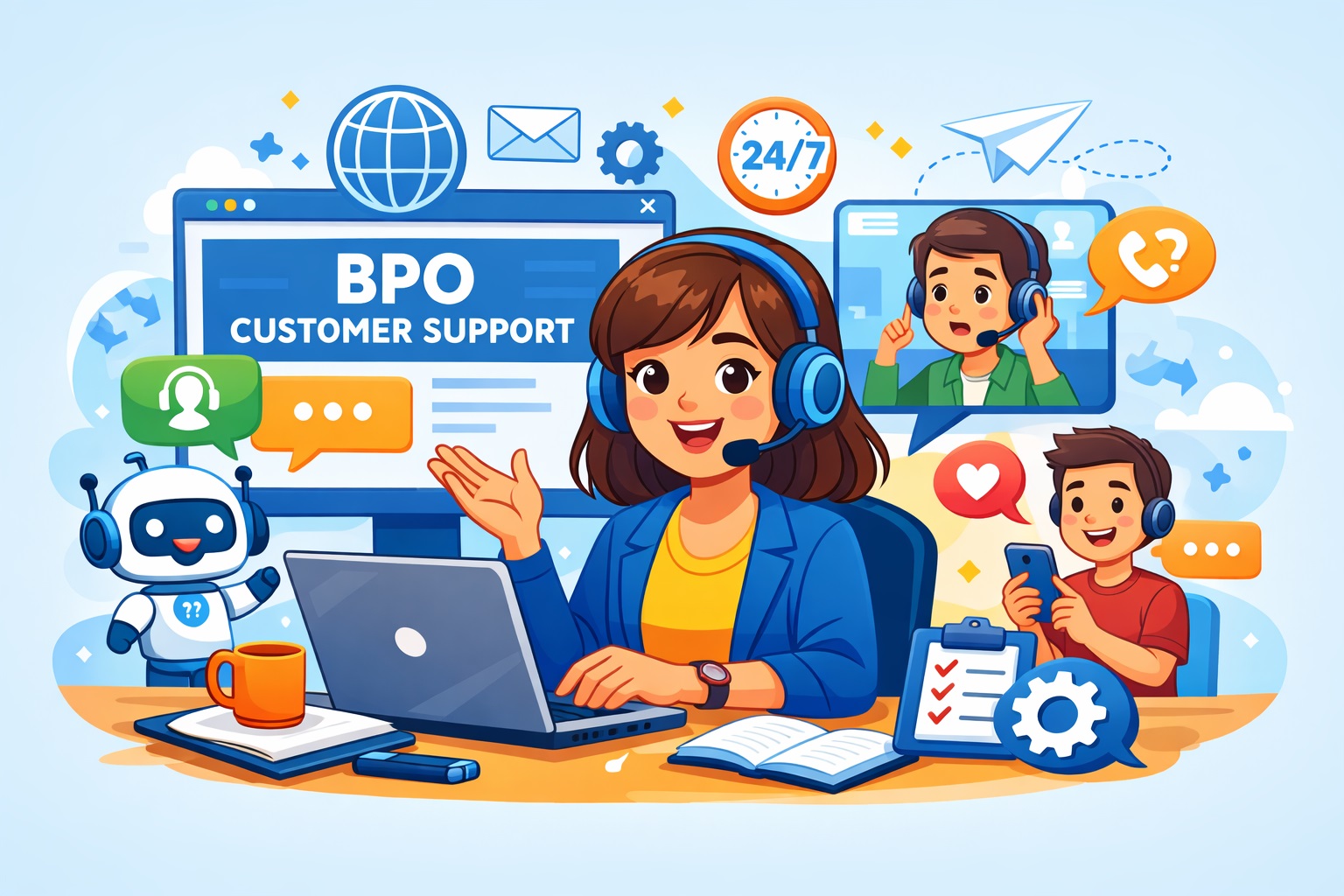
BPO Outsourcing Companies: Finding a Call Center Partner You Can Count On
Posted On: 24 July, 2026 Posted By: Admin
Customer expectations have shifted permanently. People want their queries resolved quickly, across the channel of their choice, and at any hour that suits them. For many businesses, building and staffing a round-the-clock contact centre in-house simply isn't feasible—the costs spiral, the recruitment never ends, and the technology demands constant investment. That's why a growing number of smart organisations are turning to BPO outsourcing companies to carry this load.
But not all BPO call center companies are cut from the same cloth. Some are genuine strategic partners who immerse themselves in your brand. Others are little more than a bank of headsets and a dialler. Knowing how to tell the difference is the key to outsourcing that actually improves customer loyalty rather than damaging it.
What BPO Call Center Companies Actually Do
The term "BPO" covers enormous ground, but in a call center context, it generally breaks down into a handful of core service lines.
Inbound Customer Support
The bread and butter. Agents handle account queries, billing questions, order tracking, and general troubleshooting across phone, email, live chat, and social messaging. A good team resolves issues on first contact and leaves the customer feeling genuinely helped.
Technical Helpdesk
More specialised support for products that need proper diagnosis—software glitches, hardware setup, connectivity issues. Agents here need deeper technical knowledge and the ability to talk non-technical users through solutions patiently.
Outbound Services
Welcome calls, satisfaction surveys, appointment confirmations, renewal chasing, and even targeted sales campaigns. When done properly, outbound calling strengthens relationships rather than annoying people.
Back-Office Support
The invisible work that keeps the front line moving—processing returns, updating CRM records, verifying documents, and managing service tickets. Many BPO providers bundle this alongside voice and chat support for a seamless operation.
Why Businesses Are Choosing to Outsource
Cost efficiency remains the obvious starting point. You swap fixed salaries, recruitment fees, training overheads, office space, and technology licences for a predictable per-minute or per-seat charge. For small and mid-sized businesses especially, that shift from fixed to variable cost can completely change the financial picture.
But the advantages run deeper than a cheaper bill.
Instant Scale, Zero Panic
When volumes spike—seasonal rush, product launch, unexpected press coverage—a BPO partner absorbs the surge without you scrambling to hire temps. When things quieten down, you scale back equally fast. That elasticity is nearly impossible to replicate internally.
24/7 Coverage Without the Night-Shift Headache
Managing overnight and weekend shifts burns out managers and drives up internal costs. BPO firms handle this as standard, often routing calls across global delivery centres to keep agents working sensible daytime hours while your customers get continuous coverage.
Access to Hard-to-Find Skills
Multilingual agents, experienced complaints handlers, technical troubleshooters—these profiles are difficult and expensive to recruit locally. BPO providers already have them trained and ready, so your customers get expert help from day one.
Technology That Stays Current
Contact centre platforms, AI chatbots, speech analytics, workforce management tools—this tech stack is expensive and evolves fast. BPO companies invest in it centrally, and their clients benefit without writing the cheque for every upgrade.
What Separates a Great BPO Call Center Partner from a Risky Gamble
Choosing a provider purely on price is the fastest route to disappointment. The lowest bidder often runs on wafer-thin margins, which shows up in high agent churn, rushed training, and corners cut on data security.
Look for a partner who demonstrates genuine curiosity about your business. During the sales process, do they ask about your customer journey, your pain points, your brand voice? Or do they just talk rates and seat availability? The questions they ask are a reliable preview of the relationship you'll have.
Dig into their quality assurance framework. How do they monitor calls? Do they use sentiment analysis? How often do they calibrate scoring with your internal team? A transparent, rigorous QA process separates a partner who cares about outcomes from one who just clocks minutes.
Data security is non-negotiable. Ask about certifications (ISO 27001, SOC 2, PCI DSS if payments are involved), data handling policies, and what happens in a breach scenario. If they hesitate to share these details, walk away.
Cultural fit matters more than most businesses realise. The agents representing your brand should sound like they belong to your company, not a generic outsourcing factory. That means the provider needs to understand your tone, your values, and the little things that make your customer relationships special.
The Right Partnership Pays for Itself
Outsourcing your call center isn't about abdicating responsibility for customer experience. It's about partnering with specialists whose entire business is built around delivering consistently excellent interactions. When the fit is right, your customers notice nothing except that their query was handled quickly and well. Your internal team gets their evenings and weekends back. And your business gains the operational flexibility to grow without being held back by the weight of its own support infrastructure.
In a competitive market where customer retention is harder won than ever, that combination—lower cost, higher quality, greater flexibility—isn't just a nice-to-have. It's the foundation of a genuinely resilient business.